
Men’s Work #9: A Book About Men
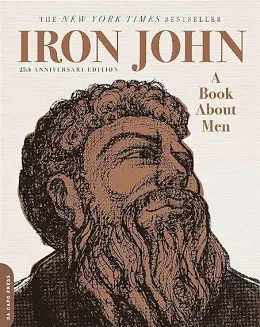
“Every modern male has, lying at the bottom of his psyche, a large, primitive being covered with hair down to his feet.”
— Robert Bly, Iron John
Iron John: A Book About Men, by Robert Bly, was published in 1990. I first came across it in 2016, when I attended the Mankind Project’s New Warrior Training Adventure. I didn’t know it at the time, but that weekend would introduce me to a different way of looking at men, masculinity, and what it means to become a man—and Iron John became an important part of that journey.
For those who aren’t familiar with Robert Bly, he was an American poet and writer who became an important voice in the men’s movement. In his writing, and especially in Iron John, he used mythology and old stories to explore men, masculinity, and what it means to reconnect with the deeper parts of who we are.
Bly begins by talking about a shift he saw in men during the 1970s. Men were beginning to explore what was often called their “feminine side.” Bly didn’t dismiss that journey. In fact, he called it “an immensely valuable journey.” But he believed something was missing.
“There’s something wonderful about this development—I mean the practice of men welcoming their own ‘feminine’ consciousness and nurturing it—this is important—and yet I have the sense that there is something wrong. The male in the past twenty years has become more thoughtful, more gentle. But by this process he has not become more free. He’s a nice boy who pleases not only his mother but also the young woman he is living with.”
Bly’s point isn’t that becoming more thoughtful, gentle, or emotionally aware is a bad thing. Quite the opposite. He sees it as important. But he asks whether something has been lost along the way—and whether becoming a more complete man requires something beyond simply developing our softer side.
And then he introduces Iron John.
The story comes from a Grimm fairy tale about a wild, hairy man who lives at the bottom of a pond. He is captured and locked inside an iron cage in the castle courtyard. Eventually, a young boy discovers the key hidden beneath his mother’s pillow and sets Iron John free.
For Bly, this isn’t simply an old fairy tale. Iron John represents something deep and wild within men—a masculine energy that our culture can teach us to suppress, fear, or simply ignore.
Bly asks us to consider something uncomfortable: What happens to a boy when he never truly separates from his mother? What happens when fathers aren’t available to initiate their sons into manhood? What happens when boys grow into men without ever being welcomed into a community of men?
That’s a provocative idea. And it’s one of the reasons I think Iron John is worth reading—not because you have to agree with everything Bly says, but because he makes you think.
He talks about initiation. Fathers and sons. Wounds. Shame. Depression. Midlife. Purpose. The need for older men. The need for other men. And what might be waiting for a man on the other side of his wounds.
And Bly’s idea of the Wild Man comes back again and again. He writes:
“The Wild Man’s job is to teach the young man how abundant, various, and many-sided his manhood is.”
There’s a lot more in this book than I could possibly cover in one blog post—and I don’t want to. My hope isn’t to explain Iron John, but to give you just enough of a glimpse to make you curious enough to pick it up for yourself.
Iron John helped connect me to a part of myself I had always sensed was there, but somehow had lost touch with—a deeper, more instinctive part of me that I couldn’t quite put into words. I didn’t know exactly what I was looking for when I first opened this book, but somewhere in those pages, I began to recognize something in myself that had been there all along.
Maybe you’ve been hearing the wild, hairy man for years. You just didn’t know what to call him.
-Dwight
More on Men’s Work


Leave a comment